








| Quick AnswerYes, strep throat is up again this fall. The CDC has tracked a seasonal rise in group A strep cases as kids went back to school, and it’s now starting to level off in most areas. Most cases are mild and clear up fast with antibiotics, but a small number turn into invasive strep, which is serious and needs quick medical care. |
If you are wondering whether strep throat increasing in 2026 is true, you are not alone. Yes, strep throat is up again this fallYour throat hurts, your kid has a fever, and you’re scrolling your phone wondering if this is “just a cold” or something you need to get checked. Fair question. Strep throat has been showing up a lot more in doctor’s offices and school nurse logs this year, and it’s worth knowing what’s actually going on.
Is Strep Throat Really Increasing in 2026?
Yes. According to the CDC, there has been an increase in reported cases of group A strep infections this fall as children went back to school in the U.S, and they’re already beginning to taper off again in most areas. That’s not unusual; it’s a seasonal pattern that tends to peak when schools are in session and dip in the summer.
What is unusual, though, is how widespread and severe the outbreak has been this year. State health departments across the country, including Pennsylvania, Delaware and Florida, have seen a marked increase in the number of strep throat cases compared to the same time last year, with some areas reporting double the number of cases. In addition, cases of invasive group A strep, the less common but more serious form, have been near-record highs in 2026, according to the CDC. Homeless shelters have also been identified as a possible breeding ground for the bacteria.
One caveat: The CDC’s summary of the situation only provides an estimate of the number of infections, as there are variations in how different local health departments report their data.
Why Is Strep Throat Going Around So Much Right Now?
A few things are feeding this trend at once, and none of them are mysterious.
1. The School Calendar
Group A strep spreads through droplets from coughing, sneezing, and shared cups or utensils. Put dozens of kids in a classroom for the first time in months, and the bacteria has an easy path around the room. This is the single biggest driver of the fall and winter bump every year.
2. A Longer-Running Upward Trend
This isn’t only a one-season blip. CDC researchers tracking invasive group A strep from 2013 to 2022 found cases steadily climbing over that decade, separate from the usual winter spikes. Researchers haven’t pinned down one single cause, but they point to a mix of factors rather than a single new “superbug.”
3. More People at Higher Risk
Conditions like diabetes, obesity, and heart disease make it easier for an ordinary strep infection to turn invasive, meaning the bacteria spreads past the throat into the bloodstream or deeper tissue. Skin wounds and sores are another entry point. As these underlying conditions become more common, so does the pool of people more vulnerable to a severe case.
4. Carriers Without Symptoms
Here’s something a lot of parents don’t know: 15% to 20% of kids carry strep bacteria in their throat at any given time with zero symptoms. They’re not sick, but they can still pass it along, which helps explain why strep moves through a classroom or household so fast.
Strep Throat Symptoms: What to Actually Look For
Strep throat tends to come on fast — often within one to three days of exposure. The telltale signs are:
- Sore throat that hurts suddenly and badly, especially when swallowing
- Fever, often 101°F or higher
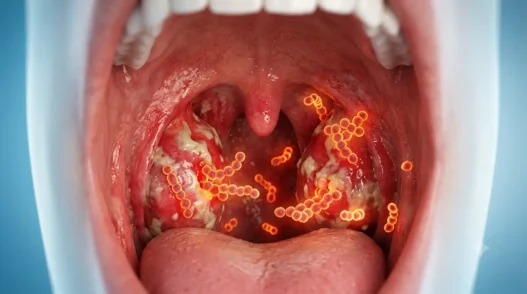
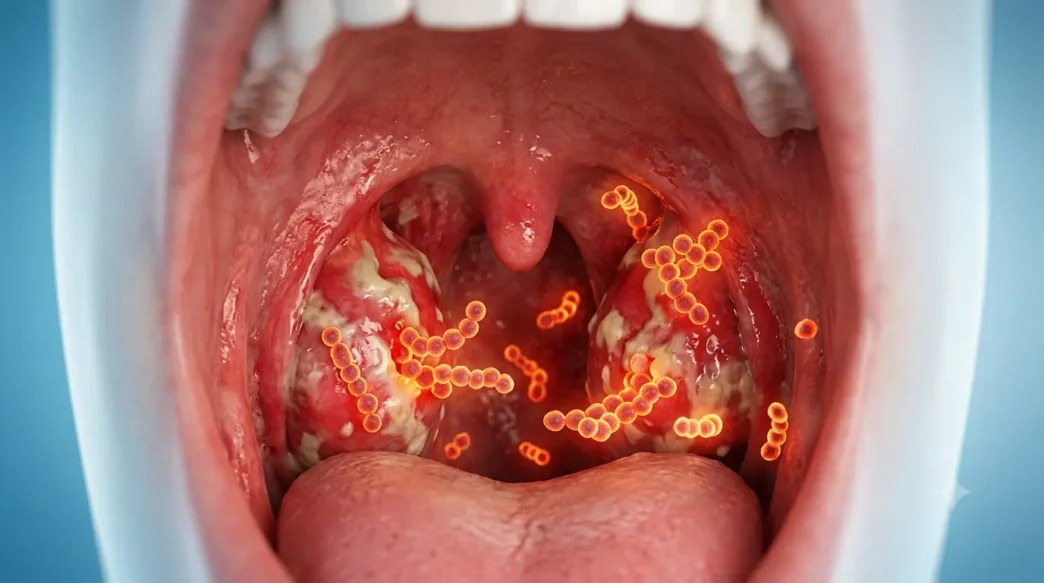
- Red, swollen tonsils, sometimes with white patches or streaks of pus
- Tiny red spots on the roof of the mouth
- Swollen, tender lymph nodes in the neck
- Headache and body aches
- In younger kids: stomachache, nausea, or vomiting instead of a clear “sore throat” complaint
One useful rule of thumb: strep throat usually does not come with a cough, runny nose, or red, watery eyes. If those are front and center, you’re more likely dealing with a cold or the flu, not strep. Scarlet fever is a related condition — it’s strep throat plus a rough, sandpaper-feeling rash, usually starting on the chest and neck.
When Should You Get Tested for Strep Throat?
Get a strep test if you or your child have a sore throat with a fever, swollen glands, and no congestion or cough. This combination of symptoms is specific enough that most doctors will want to rule out strep, just to be safe. The best thing to do is get a rapid strep test, which checks for signs of infection in the throat. It only takes 15 minutes, but if it’s negative and strep is still suspected, your doctor may do a throat culture, a more accurate test that takes one or two days to come back. Don’t go treating a strep infection with old antibiotics, or taking antibiotics at all if the test was negative. Incorrect dosages or drugs can allow the infection to persist and make it more likely to spread.
Seek Emergency Care If You See These Signs
Most strep cases are routine. But a small number turn into invasive disease, and that needs same-day attention. Call your doctor or go to the ER if a sore throat or minor skin injury comes with:
- A fever that keeps climbing along with extreme tiredness or confusion
- A purple or dark-colored rash
- Swelling, redness, or pain around a wound that’s spreading fast
- Trouble breathing or swallowing
- Symptoms that feel way more severe than a typical sore throat
These are the warning signs of invasive group A strep, which can lead to toxic shock syndrome or necrotizing fasciitis if it’s not caught early. It’s rare, but it moves fast, so don’t wait it out.
Treating Strep Throat
Strep is a bacterial infection, so it responds to antibiotics — usually penicillin or amoxicillin, taken for 10 days. Most people start feeling better within 24 to 48 hours of starting treatment and are no longer contagious after about 24 hours on antibiotics, which is also the general guideline for when a child can head back to school. Finish the full course even once symptoms fade; stopping early is one reason infections linger or return.
The Bottom Line
Strep throat is having a bigger fall than usual, and the data backs that up. Most cases are still the garden-variety kind: uncomfortable, treatable, and gone within a week on antibiotics. Know the real symptoms, get tested when the picture fits, and keep an eye out for the rare warning signs of invasive strep. When in doubt, a same-day visit with your doctor or an urgent care clinic beats guessing.
FAQ: Strep Throat in 2026
Is strep throat an epidemic in 2026?
No. It’s a seasonal increase, not an epidemic. Cases rise every fall and winter as kids return to school, and 2026 has followed that same pattern, just at a higher level than recent years, alongside near-record invasive case counts.
Can adults get strep throat too?
Yes, though it’s far more common in children ages 5 to 15. Adults who spend a lot of time around kids, such as teachers, parents, and childcare workers, are at higher risk of catching it.
How long is strep throat contagious?
You’re contagious from a day or two before symptoms start until about 24 hours after beginning antibiotics. Without treatment, you can stay contagious for two to three weeks.
Can strep throat go away without antibiotics?
It sometimes clears on its own in 3 to 7 days, but skipping antibiotics raises the risk of complications like rheumatic fever and invasive infection, and keeps you contagious longer. Testing and treatment are the safer route.
What’s the difference between strep throat and a sore throat from a cold?
A cold usually comes with a cough, runny nose, and congestion, and it builds gradually. Strep throat tends to hit fast, bring a higher fever, and skip the cough and congestion entirely.
Should I get a strep test if I have a cough?
Probably not necessary. A cough points toward a viral infection rather than strep, since classic strep throat doesn’t usually include one. Still mention it to your doctor if you’re unsure.