







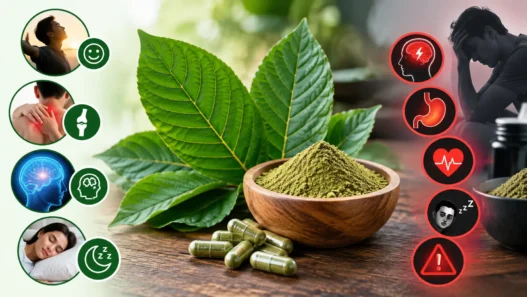
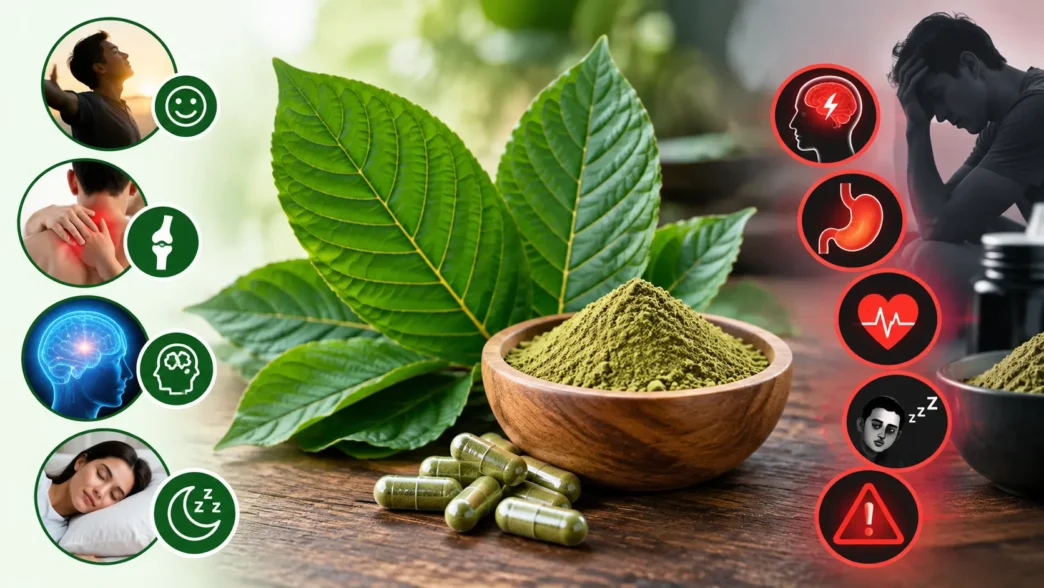
Quick Answer: “Understanding Kratom starts with knowing that it is a tropical plant from Southeast Asia that some people use for pain relief, energy, or mood support. It affects the body in ways similar to opioids, and health officials warn it carries real risks — including dependence, withdrawal, organ damage, and in rare cases, death. It is not approved by the FDA for any medical use, and its legal status varies by U.S. state.”
What Is Kratom?
Kratom comes from the leaves of Mitragyna speciosa, a tree that grows naturally in Thailand, Malaysia, Indonesia, and Papua New Guinea. People have used the leaves for generations in these regions, usually by chewing them or brewing them into tea.
In the United States, kratom is sold in a few common forms:
- Capsules and tablets
- Loose or powdered leaf
- Liquid extracts or “shots”
- Gum or resin
You’ll often find it marketed online or in smoke shops and gas stations as a “natural” supplement for energy, mood, or pain. But “natural” doesn’t always mean safe — and that’s where things get complicated.
Why Do People Use Kratom?
Most people turn to kratom hoping for one of these effects:
- Pain relief – especially for chronic pain conditions
- Energy or focus – in small amounts, it can feel stimulating
- Relaxation or mood lift – in larger amounts, it can feel sedating
- Help with opioid withdrawal – some use it to self-manage symptoms
Here’s the key problem: health officials have stated there’s no scientific evidence showing kratom is safe or effective for any medical use. The FDA has specifically said there are no well-designed clinical studies proving kratom helps with opioid withdrawal or any other condition. So while people report these benefits anecdotally, there’s no solid research backing them up yet.
How Does Kratom Affect the Body?
This is the part most people don’t realize. The compounds in kratom interact with the body in ways similar to opioids, even though it comes from a plant rather than the poppy. At low doses, it tends to act more like a stimulant. At higher doses, it behaves more like a sedative or opioid.
This dual nature is exactly why researchers compare it to prescription painkillers in terms of risk — your body can respond to it the same way it responds to opioid medications.
Side Effects of Kratom
Even at “normal” use levels, kratom can cause:
- Nausea or upset stomach
- Dry mouth
- Constipation
- Dizziness
- Sweating and frequent urination
- Loss of appetite
At higher doses or with regular, long-term use, the risks escalate. Reports show that kratom can cause seizures at high doses, and people who use it regularly can develop liver injury. Other documented risks include dependence, acute toxicity, overdose, organ failure, delusional thinking, psychosis, and dehydration from excessive sweating and urination.
Can You Get Addicted to Kratom?
Yes. Because kratom acts on the same pathways as opioids, your body can build tolerance and dependence with regular use. That means:
- You may need more to get the same effect over time
- Stopping suddenly can trigger withdrawal symptoms similar to opioid withdrawal (irritability, muscle aches, trouble sleeping, cravings)
- Babies born to mothers who use kratom regularly have sometimes needed treatment for opioid withdrawal symptoms
If you or someone you know is struggling with kratom use, this isn’t something to manage alone — a doctor or addiction specialist can help create a safer path forward.
A Hidden Danger: Contamination
One risk not considered often enough is the issue of product quality. Since the drug is not an FDA-approved substance, it does not undergo the same battery of manufacturing tests as standard pharmaceuticals, and some products have been found to be tainted with salmonella and heavy metals. In other words, the product one gets may not only be dangerous due to its active ingredients but may have foreign substances that are completely unrelated to the desired effect.
Since products are not regulated by the FDA, strength can vary from batch to batch, and some have been found to contain additional, unlisted ingredients.
Is Kratom Legal?
This depends on the state you live in. This substance is banned in several states, among which are Alabama, Arkansas, Indiana, Tennessee, and Wisconsin. Other states and cities have local laws prohibiting its use or sale. There is no federal law regulating this substance, but the FDA is using its authority as a regulatory agency over unapproved drugs to restrict the import of this substance, and as of November 2026, all products selling this substance in the United States must indicate the ingredients on the label, as well as a warning about the risk of dependence and withdrawal similar to opiate narcotics.
Before purchasing or using this substance, it is important to research the laws of your state, as they may change.
Should You Try Kratom?
This is a personal decision, but go in with your eyes open:
- It is not FDA-approved or regulated like a medication
- It can be contaminated or inconsistent in strength
- It carries a real risk of dependence and withdrawal
- It can interact dangerously with alcohol, opioids, and other drugs
- Deaths have been reported in connection with kratom use, in some cases involving kratom laced with other opioids
If you’re dealing with chronic pain, anxiety, or trying to come off opioids, talk to a doctor first. There are regulated, evidence-based treatments that don’t come with the same guesswork.
FAQ
Is kratom an opioid?
Not technically — it comes from a plant, not the opium poppy. But its compounds act on similar receptors in the body, producing opioid-like effects and risks.
Can you overdose on kratom?
Yes, especially at high doses or when mixed with other substances like alcohol or opioids. Overdose and organ failure have both been documented.
Is kratom legal in the USA?
There’s no federal ban, but several states and cities prohibit it. Always check local laws before purchasing.
Does kratom show up on a drug test?
Standard drug panels usually don’t test for kratom specifically, but specialized tests can detect it.
Is kratom safe for pregnant women?
No. Regular use during pregnancy has been linked to newborns needing treatment for opioid-like withdrawal symptoms.
Where can I report a bad reaction to kratom?
You can report side effects through the FDA’s MedWatch Safety Information and Adverse Event Reporting Program.
This article is for informational purposes only and isn’t a substitute for medical advice. If you’re considering kratom for pain, anxiety, or opioid withdrawal, talk to a healthcare provider first.