





Quick Answer
Peptides explained: As this simple molecule takes over the wellness and biohacking spotlight in 2026, understanding what these short amino acid chains actually do is more important than ever. Peptides explained simply: they are naturally occurring compounds that act as cellular messengers throughout your body.
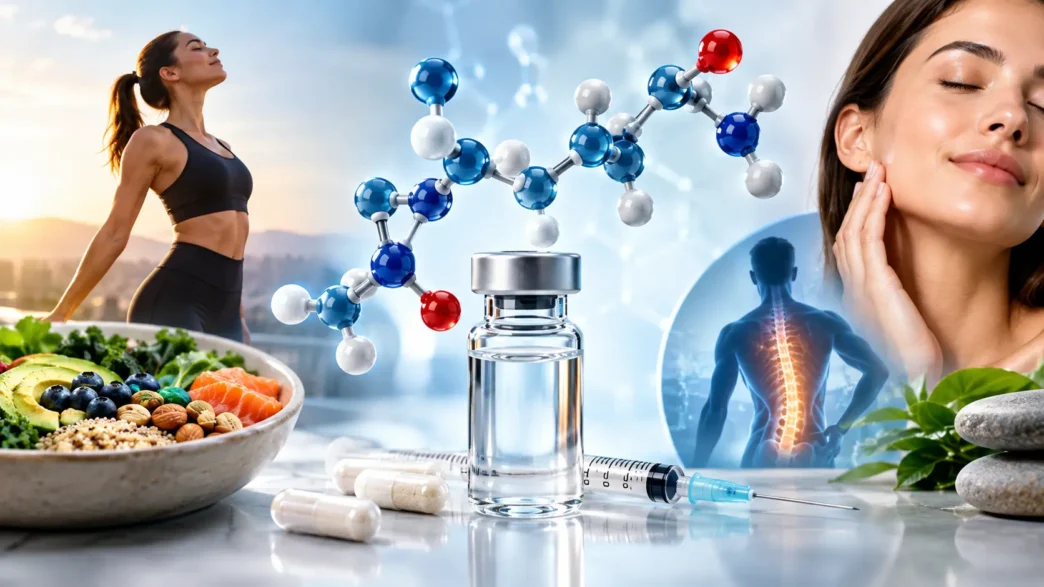
Peptides are short chains of amino acids, which are the building blocks of protein. They are naturally occurring compounds in the body that act as messengers, relaying signals to cells and instructing them to perform specific functions. More than 100 peptides are approved by the FDA for the treatment of conditions such as diabetes, metabolism disorders, and muscle gain, including insulin and GLP-1 drugs like Ozempic. The current wellness industry trend involves the usage of unapproved “research” peptides that are touted to promote muscle recovery, anti-aging, and weight loss, but experts remain skeptical about the authenticity of their effects.
What Exactly Are Peptides?
Think of amino acids as beads and peptides as short strands of these beads. Peptides are short chains of amino acids, which are responsible for regulating hormones, transmitting neurotransmitters, and repairing tissues in the human body. They can act as hormones in the body, for example, insulin, or be formed naturally during the digestion of food rich in proteins.
Proteins can be compared to sentences, while peptides to their words. The human body is constantly producing peptides on its own, without any external interference.
Why Is Everyone Suddenly Talking About Peptides?
It feels like peptides went from a niche topic to a dinner-table conversation almost overnight. A few real reasons explain the jump.
The GLP-1 Boom Opened the Door
A big part of the peptide moment traces back to the rise of GLP-1 medications for weight loss, which pulled peptides into mainstream conversation. Once people learned that Ozempic, Wegovy, and Mounjaro were technically peptides, curiosity about “what else peptides can do” took off fast.
Social Media and Biohacking Culture
Social media and online health communities turned peptides into something everyday people could research and try to access on their own, while biohacking and longevity culture pushed more self-experimentation and health optimization. Wellness influencers now post about peptides the way they once posted about green juice or cold plunges.
Policy Changes Added Fuel
In February 2026, federal health authorities took an action that allowed the compounding of roughly 14 previously restricted peptides, including BPC-157, GHK-Cu, Thymosin Alpha-1, CJC-1295, and Ipamorelin. This decision alone was enough to generate renewed consumer and media interest in the space. Peptides went from being a niche topic found only on underground forums to a mainstream subject the day after the announcement.
Search Interest Has Exploded
Searches for longevity-related peptides grew by roughly 300% year over year, with a large share of that interest focused specifically on weight loss. That kind of growth is hard for any health trend to ignore.
How Do Peptides Actually Work in the Body?
In February 2026, federal health authorities took an action that allowed the compounding of roughly 14 previously restricted peptides, including BPC-157, GHK-Cu, Thymosin Alpha-1, CJC-1295, and Ipamorelin. This decision alone was enough to generate renewed consumer and media interest in the space. Peptides went from being a niche topic found only on underground forums to a mainstream subject the day after the announcement.
The Most Talked-About Peptide Categories Right Now
Recovery and Muscle Support
Peptides like BPC-157 and TB-500 are popular among athletes and weekend warriors hoping to bounce back faster from injuries and tough workouts.
Growth Hormone Optimization
CJC-1295 and Ipamorelin are often paired together by people chasing better sleep, lean muscle, and faster recovery, especially within longevity-focused clinics.
Brain and Mood Support
Selank and Semax are peptides people use for mental clarity, focus, stress resilience, and mood balance.
Skin and Anti-Aging
Peptides have quietly appeared in high-end skincare for years, but 2026 marked the point where interest moved well beyond topical creams. GHK-Cu is one of the most searched “beauty peptides” right now.
Weight and Metabolic Health
This is where approved medications like semaglutide and tirzepatide live — by far the most clinically studied corner of the peptide world.
FDA-Approved vs. Experimental Peptides: Know the Difference
This is the part most wellness headlines skip, and it matters a lot.
While peptides per se are not new, the recent social media phenomenon reflects the hype around unapproved and potentially experimental compounds that are appearing online and being promoted as health- and beauty-enhancing agents. The FDA has approved numerous peptides for therapeutic use, while others that are not FDA-approved are circulating on social media. Many of the latter have not been proven to be safe or effective and are not considered valid medical treatments, having only been tested in cell cultures. Before turning to any of these unproven substances, patients should ask their provider to clarify which category the substance falls into.
Are Peptides Safe?
Experts are cautiously optimistic about the potential of peptides for certain applications but remain skeptical about claims that individual peptides or combinations of them have been proved to be effective in combating aging and prolonging life. In other words, while peptides are beneficial in particular cases and for certain patients, they are not necessarily safe and effective in a broader context.
Thus, if you want to go into this field, it might be a good idea to consult with health professionals and not risk your money and health by ordering unproven substances from an unknown supplier.
FAQ: Peptides, Answered Simply
What are peptides, in one sentence?
Peptides are short chains of amino acids that act as messengers, telling cells in your body what to do.
Are peptides the same thing as protein?
Not exactly — peptides are shorter chains of the same amino acids that make up protein, and they usually work as signals rather than as building material.
Are GLP-1 drugs like Ozempic considered peptides?
Yes. Popular weight-loss and diabetes medications such as Ozempic, Wegovy, Zepbound, and Mounjaro are all classified as peptides.
Are peptides legal?
FDA-approved peptide medications are legal and available by prescription. Many “research” peptides sold online exist in a legal gray area and aren’t approved for human use.
Can peptides help with weight loss?
Approved peptides like semaglutide and tirzepatide have strong clinical data behind their weight-loss effects. Other trending peptides marketed for weight loss generally don’t have that same level of research.
Should I try peptides I see on social media?
Experts generally recommend caution — talk to a doctor first, since many trending peptides are unregulated and untested in humans.
Helpful Resources to Learn More
• AMA: Peptides — Breakthrough Solution or Risky Trend?
• CNN Health: Peptides — What’s Real, What’s Risky, and What’s Next